Seeds of Things That Make the Sum
Meaning is in the moment captured.
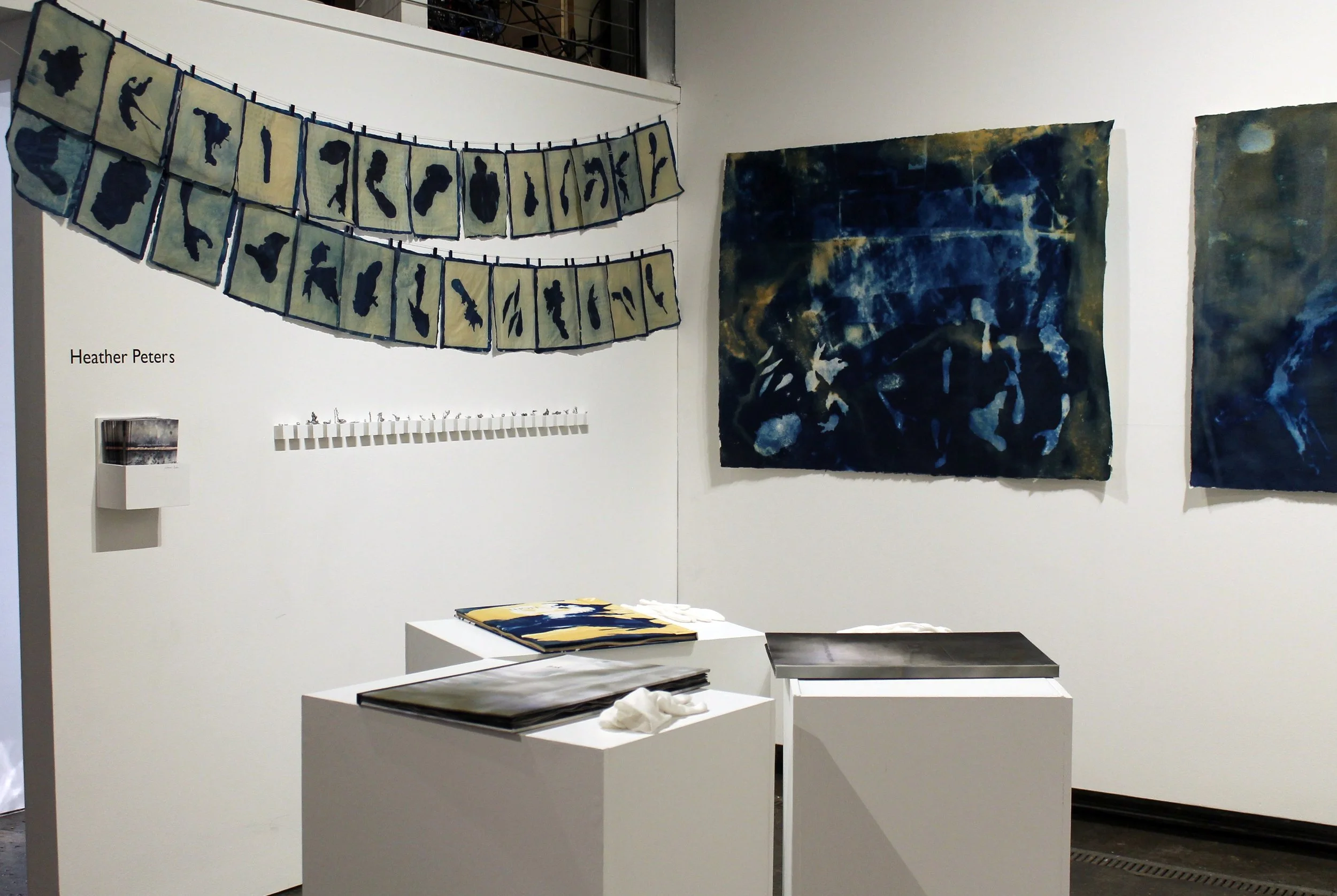
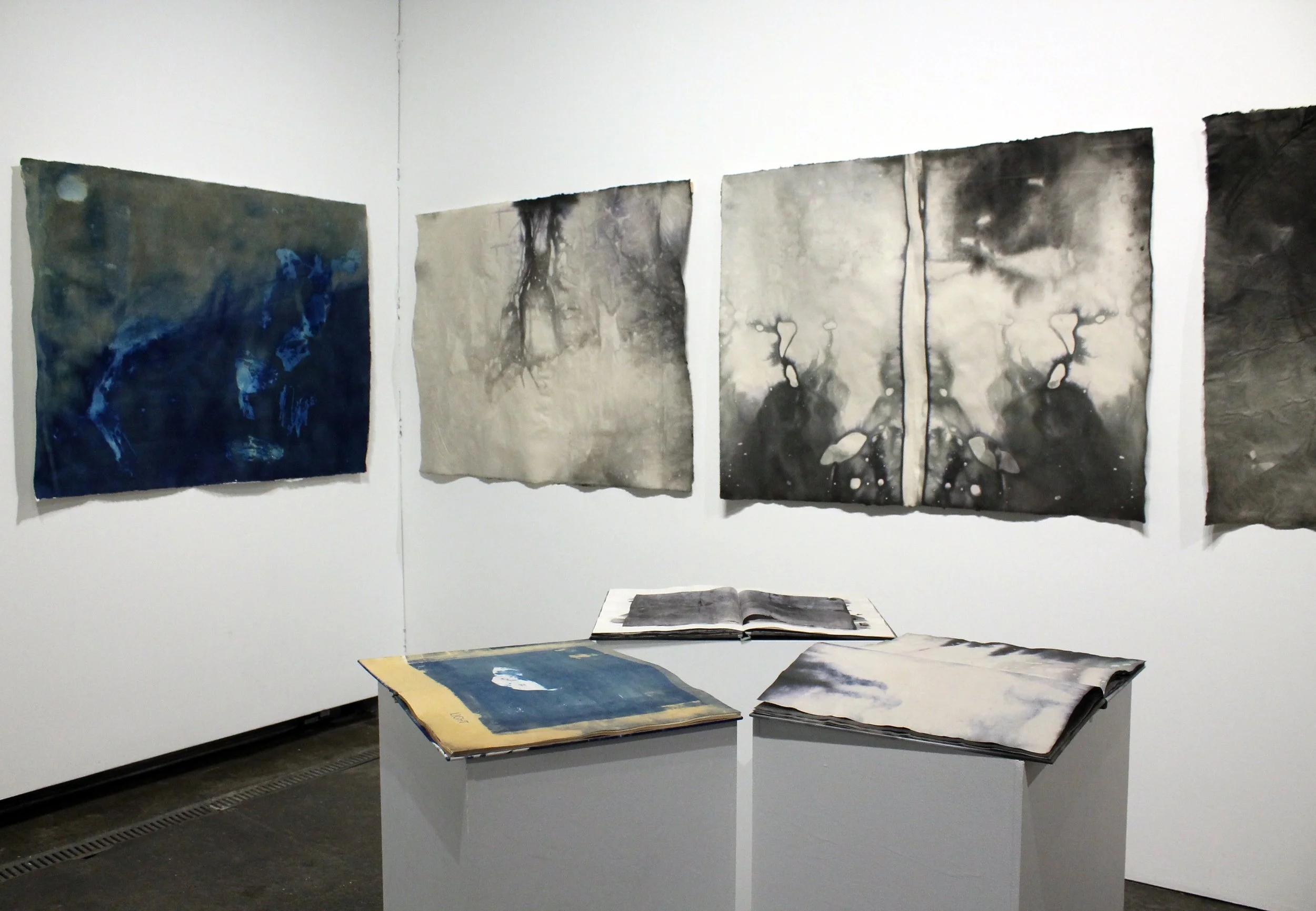
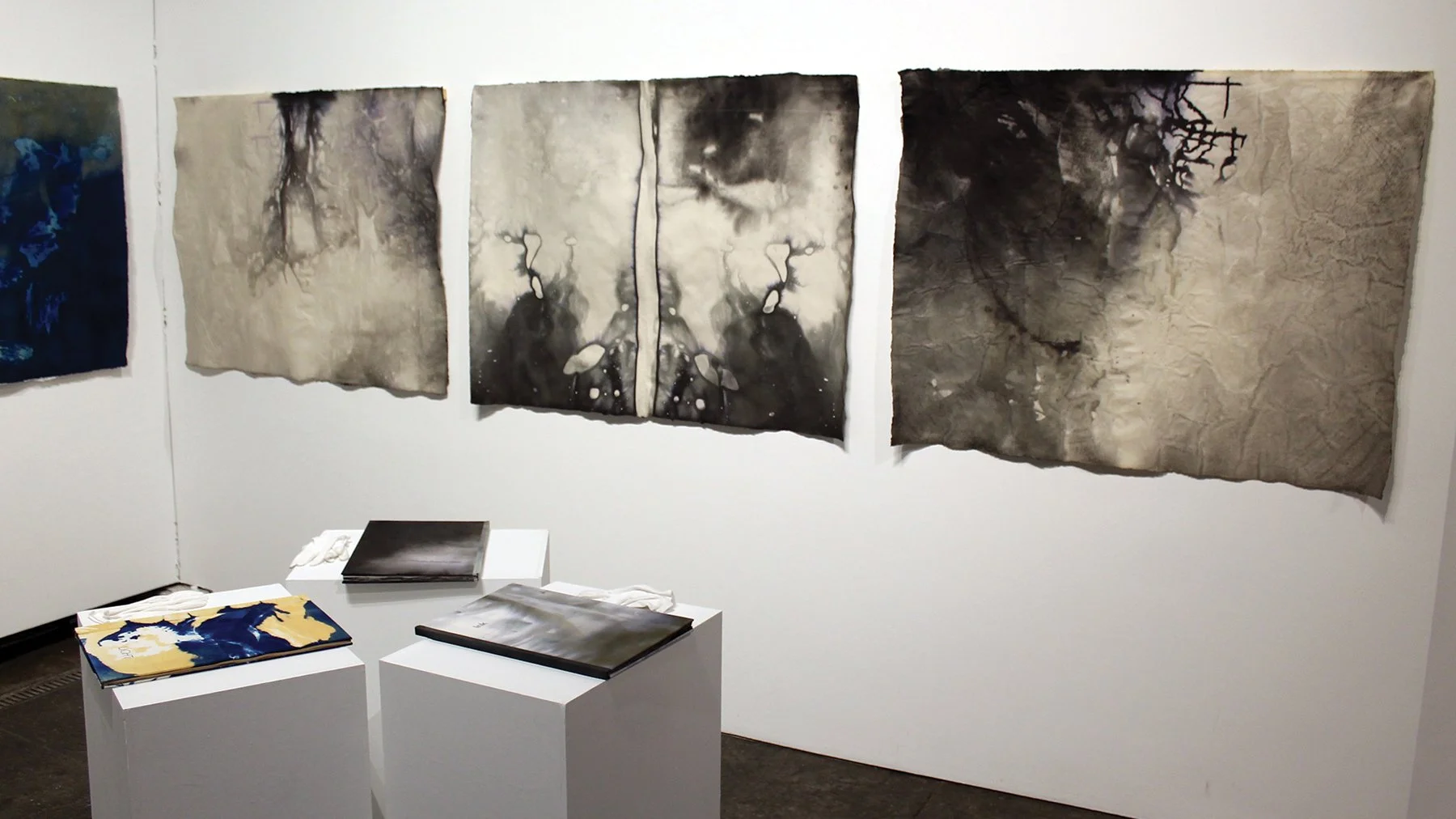
Time and movement captured, not just on the surface, but within the fibers of paper. Meaning is culled from viewing the occurrence of pigment and fiber, that is ink on paper, just as it has been transmitted historically through the use of pigment and lead. Using the arsenal of human communication methods to relay an emotional and complicated experience that is simultaneously familiar in its material content, yet new in its application. I see my work with these materials as an investigation into the ways of telling a story. The human story in a way, but also the story of each atom as it moves. The larger pigments pushed by the smaller, invisible molecules of gas and water that twist and propel interminably in this sustained environment of unseen turmoil. In my mind I see the ink flowing in and around the fibers in the paper, propelled by laws of attraction and fluidity. Delving into this process, I have been experimenting with the way pigmented ink is pulled apart in water to display the particular colors in the ink’s recipe. It is the secret recipe that makes up what reads as black, but can actually be blue and orange, green and purple. The pigment in black ink is not actually black, but a dense combination of all colors. The capillary action in paper allows the water to pull these pigments apart, and once the water dries, you are left with the record of this experience. In science, this is called chromatography, where the different parts of the ink solution travel at different speeds in a liquid solution. This process of breaking something down in order to find a significant and beautiful art piece has become the foundation of my studio practice. Seeking to understand the art making process from its particulate base allows me to discover a path that leads me to this uniquely personal work. The stories I want to tell, the experiences I want to translate merge with this exploration and coalesce, becoming something new and slightly unfamiliar.
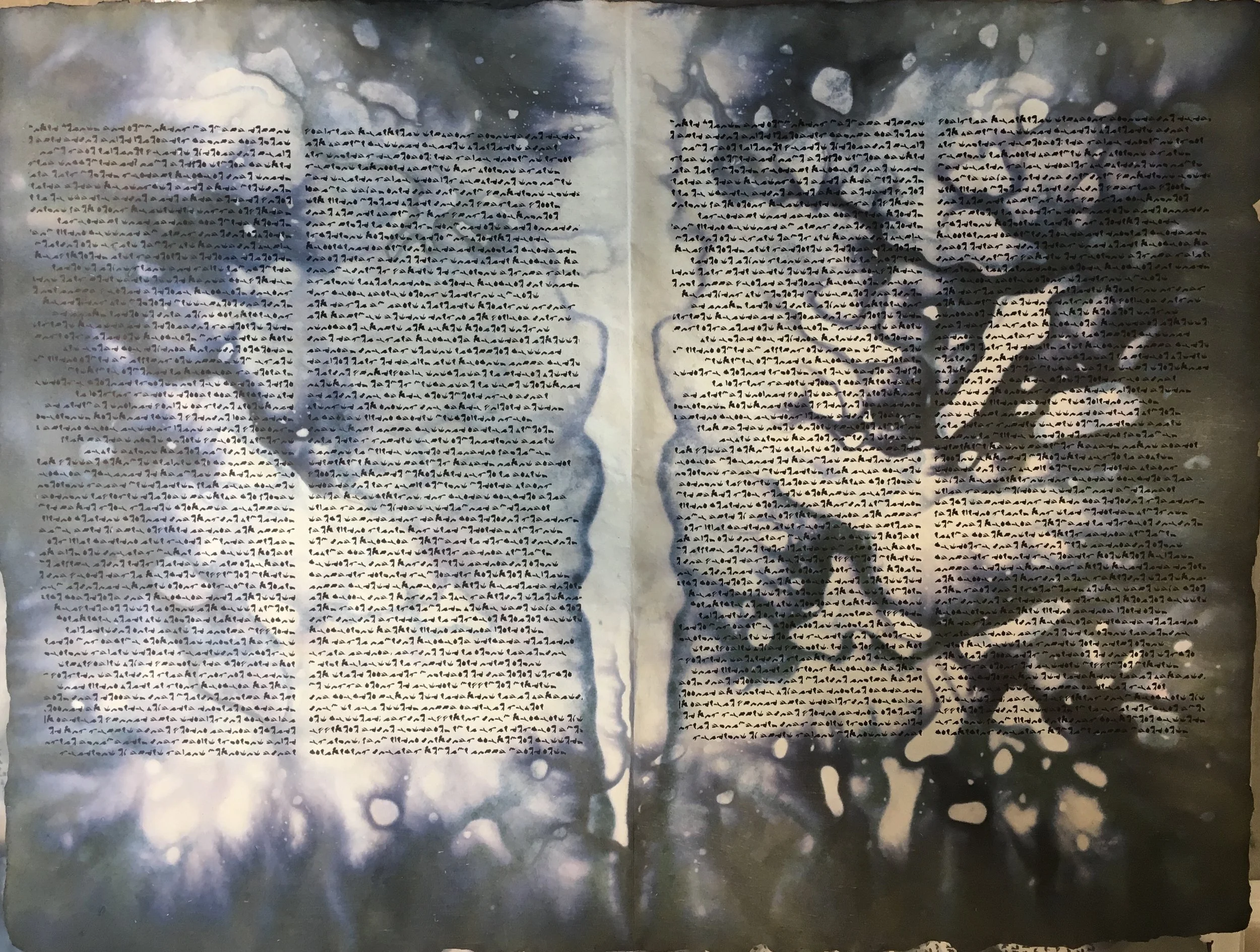
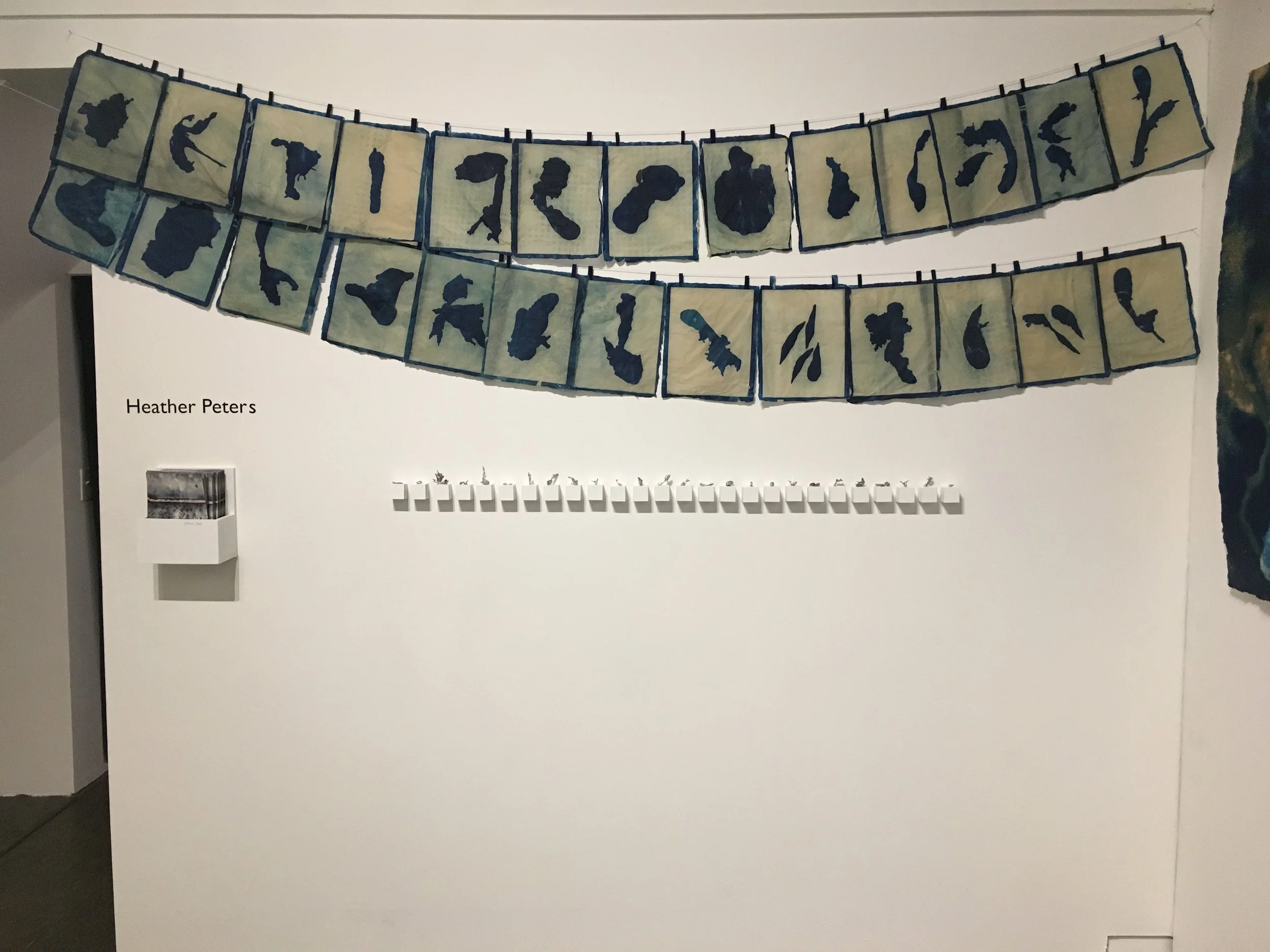
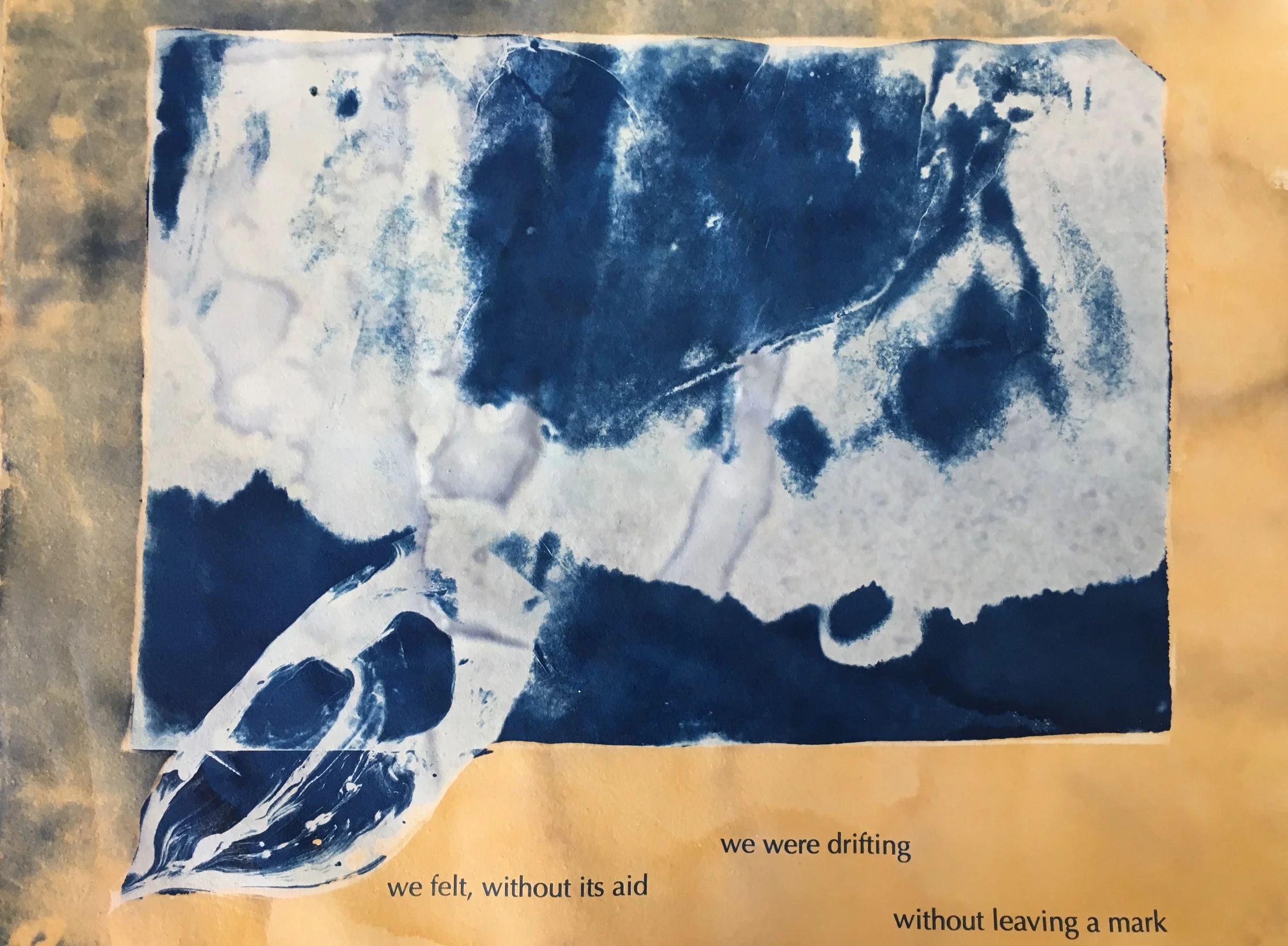
Awed by the substantial presence of the ink-wash pieces, I will sometimes brush the dried inked paper with acrylic varnish, which turns the paper translucent, allowing the ink to show its pattern and dimensional structure in the way the interlocking paper fibers themselves formed as they dried. This translucent paper and ink object I realized would also let light through, so I began to turn these into cyanotypes. The ink pattern blocking ultraviolet rays on paper treated with ammonium iron citrate and potassium ferricyanide became another generation in the record making process. Working with light felt appropriate because it became part of my effort to capture the invisible and create a record of time and movement in one piece of paper, as though a slice of the dimensional world could be frozen for future viewing.
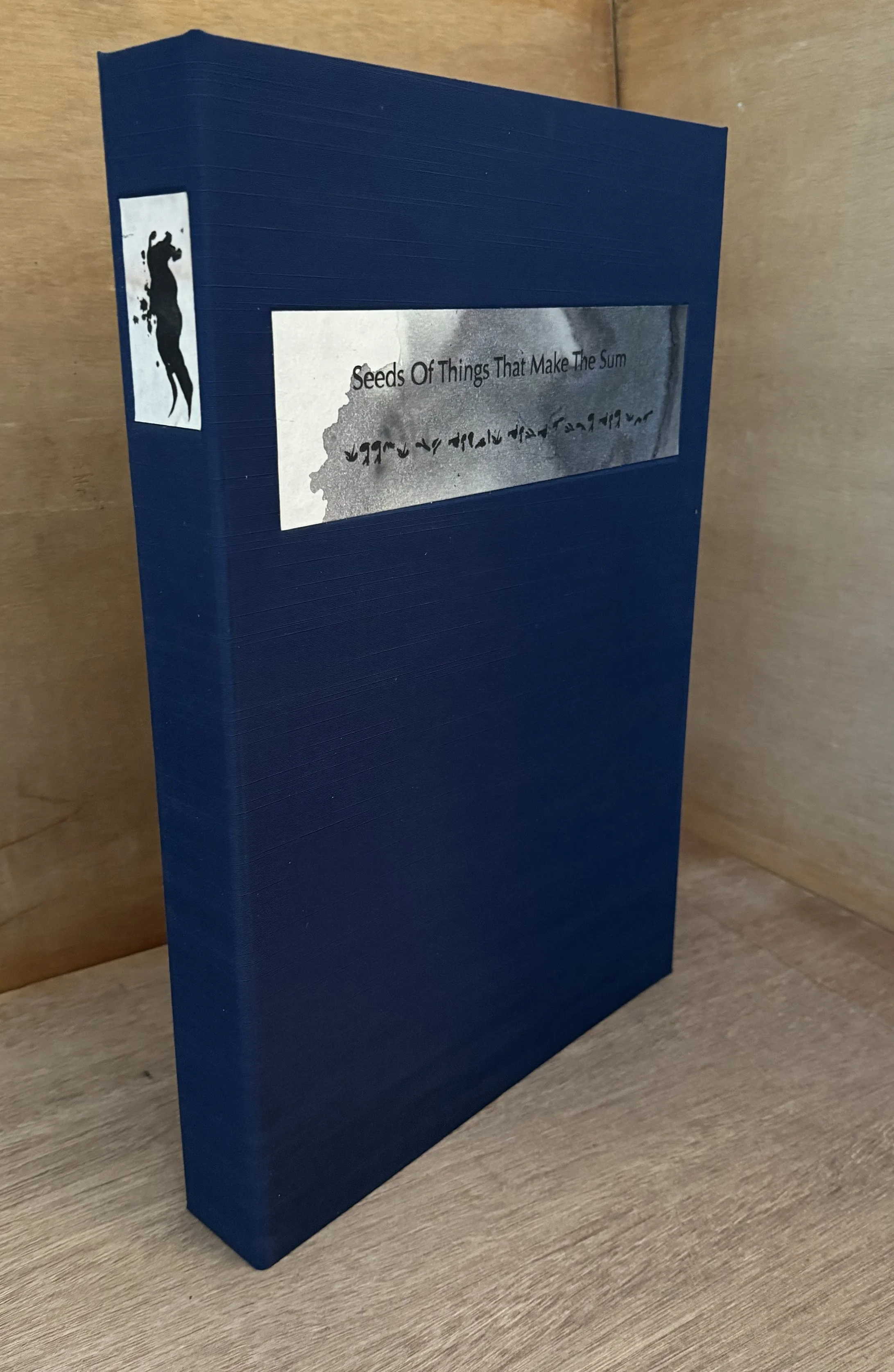
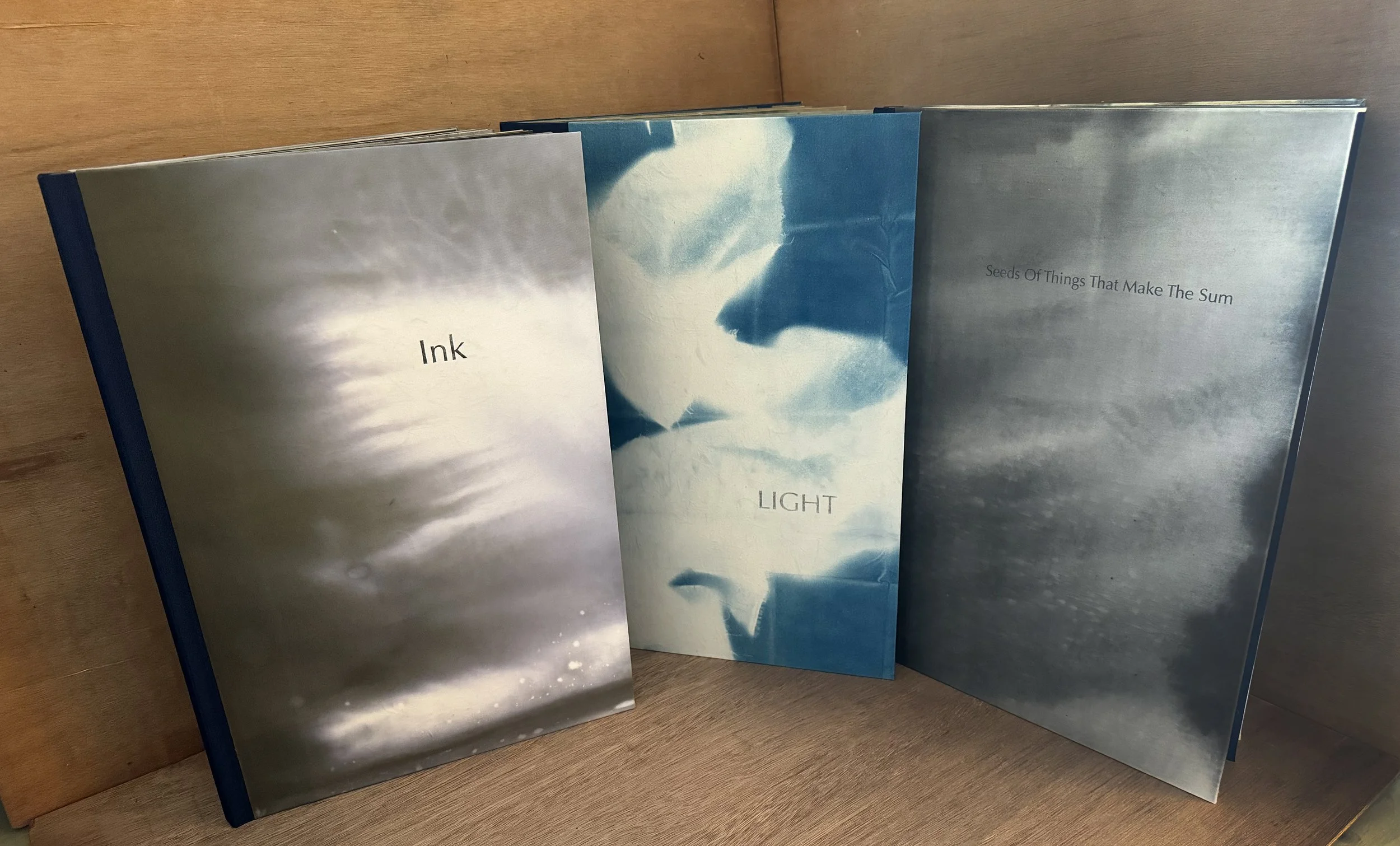
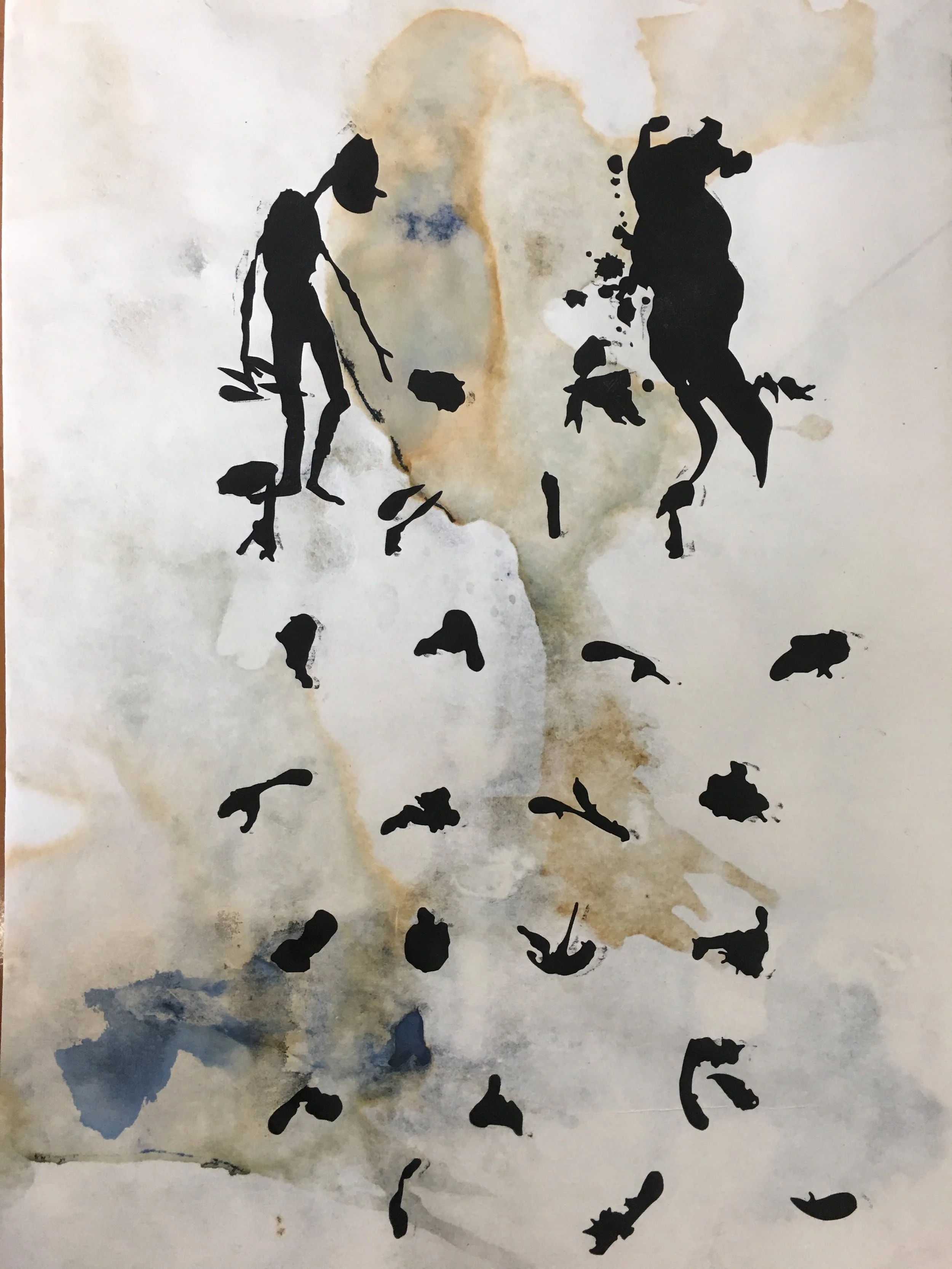
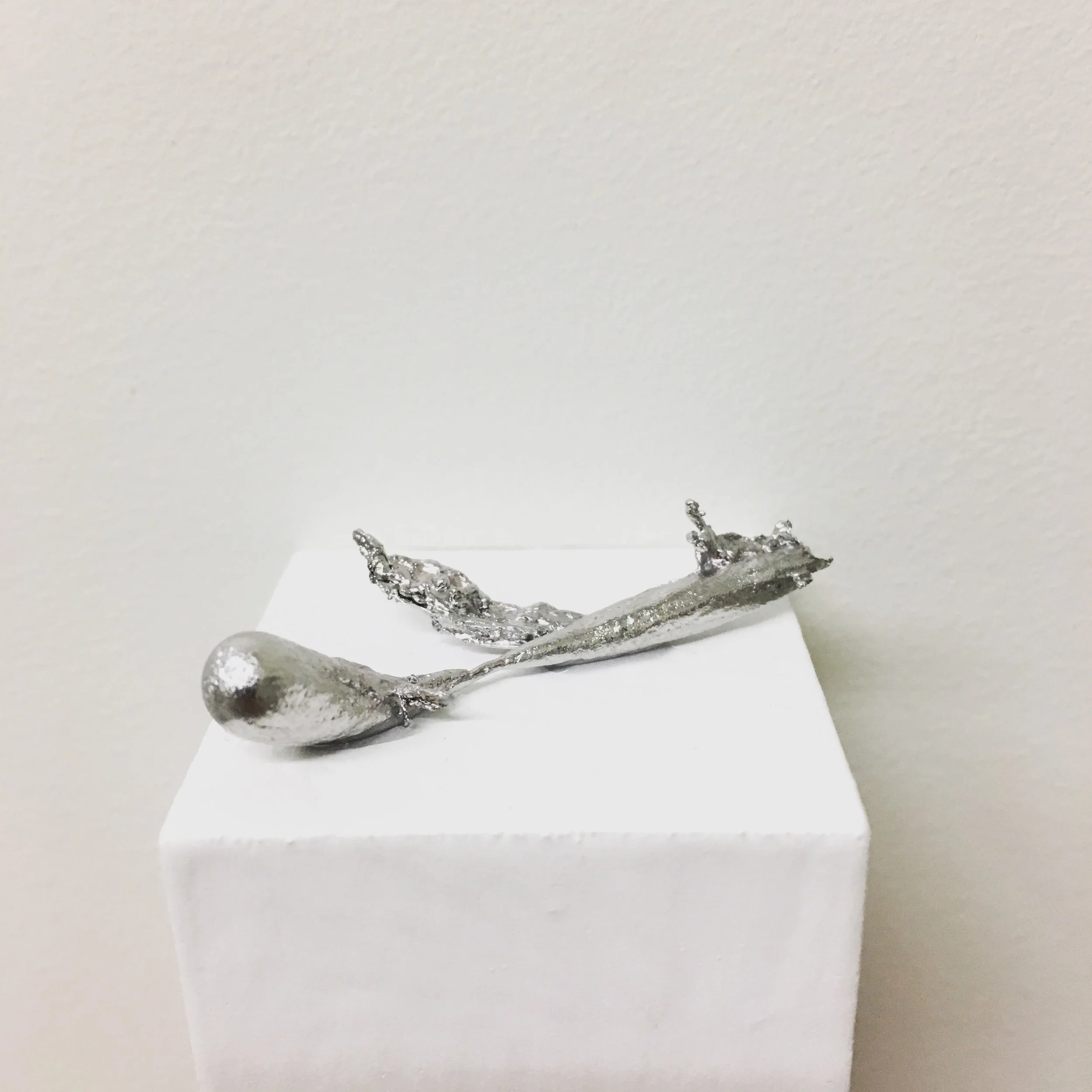
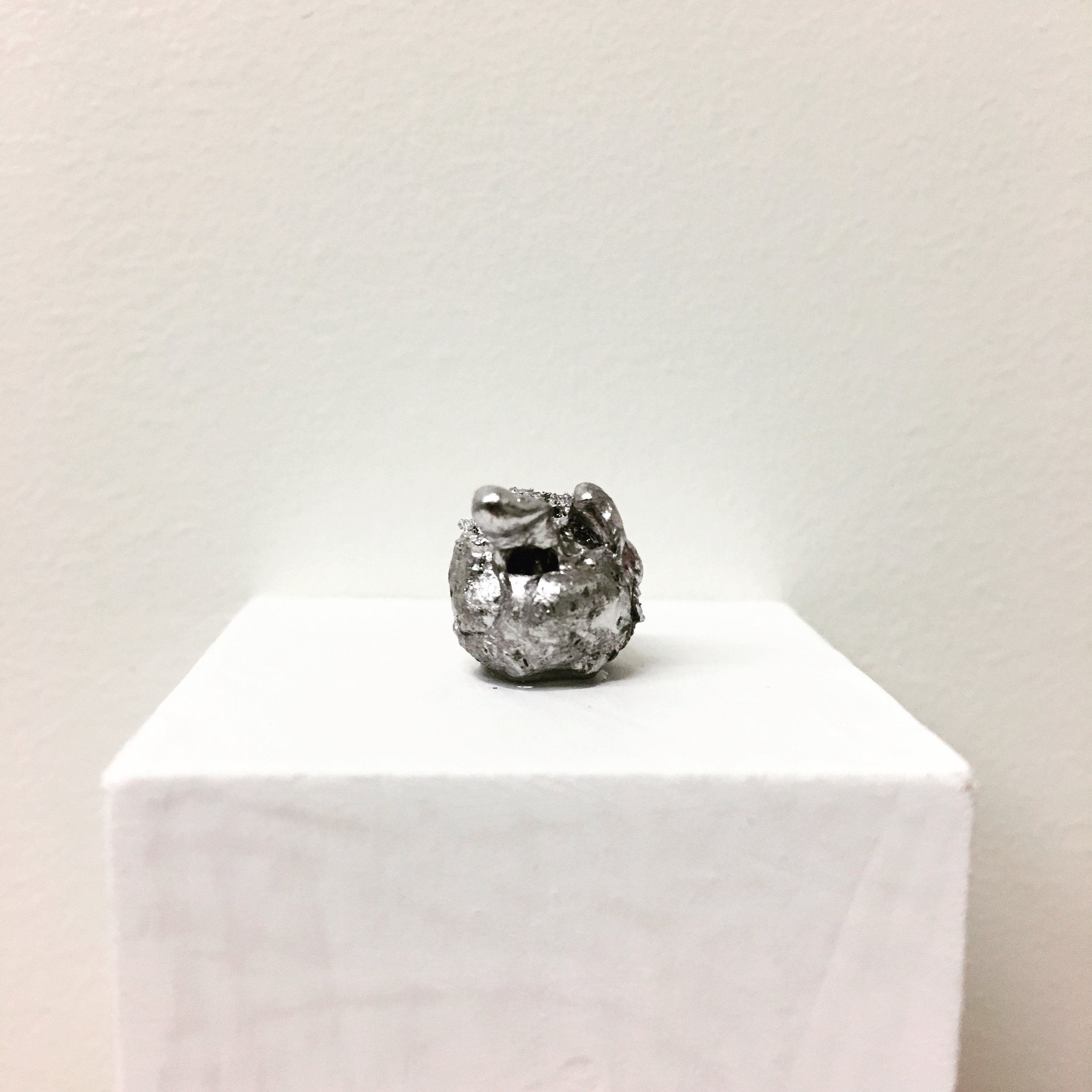
The type used in the final portion of this project grew out of an interest in the use of divination as a way to find meaning in everyday existence. It is thought by historians that some of the earliest forms of writing developed through fortune telling methods that were believed to communicate with a world of spirits beyond us. Molybdomancy is a divination practice that uses melted lead poured into water to create a shape that is used to divine the future. I was fascinated by the idea that the letters of an alphabet, the intimate elements that make up communication could be liberated from their ties to a specific group of sounds and visual connotation and given a uniquely personal chance to have their own future told, transforming their very shape into something organic, mutated and unbound from its formerly prescribed meaning. A shared alphabet gives meaning the ability to transfer, but what if we took that burden away from a set of letters, specifically hard worn lead letters, consigned to a hell box in a busy print studio? If these letters were melted down again, purified from their previous meaning through the process of high heat, and cast into water to take whatever form the moment, temperature and gesture provided, what would each letter ultimately look like? Could some inner nature of the letter become a thing revealed once the effort of casting the melted lead into a specific shape is taken away from it?
Meaning from materiality, as in fortune telling, is derived from a group of abstract elements that are ultimately read when a system is recognized. The materiality of a letter is important. I argue that materials are a language in themselves, a grasping way for humans to transfer sense and context. Could the alphabet have its own desire? If we were to free our alphabet, where would it go? What shape would it make? Does a set of letters have a force? Ultimately, I have impressed my own personality onto the shape of these letters. My gesture, too, is captured. I have become part of this new alphabet. Twenty-six tiny shapes captured and translated into something that describes again a moment in time. To achieve an artifact of my actions with these materials is a monument to a brief moment of an experience that was fleeting but is now caught forever in this paper record. It is a proof of existence, and proof of the substance of life. The melted type and artifacts from this installation can be found at letterformarchive.org